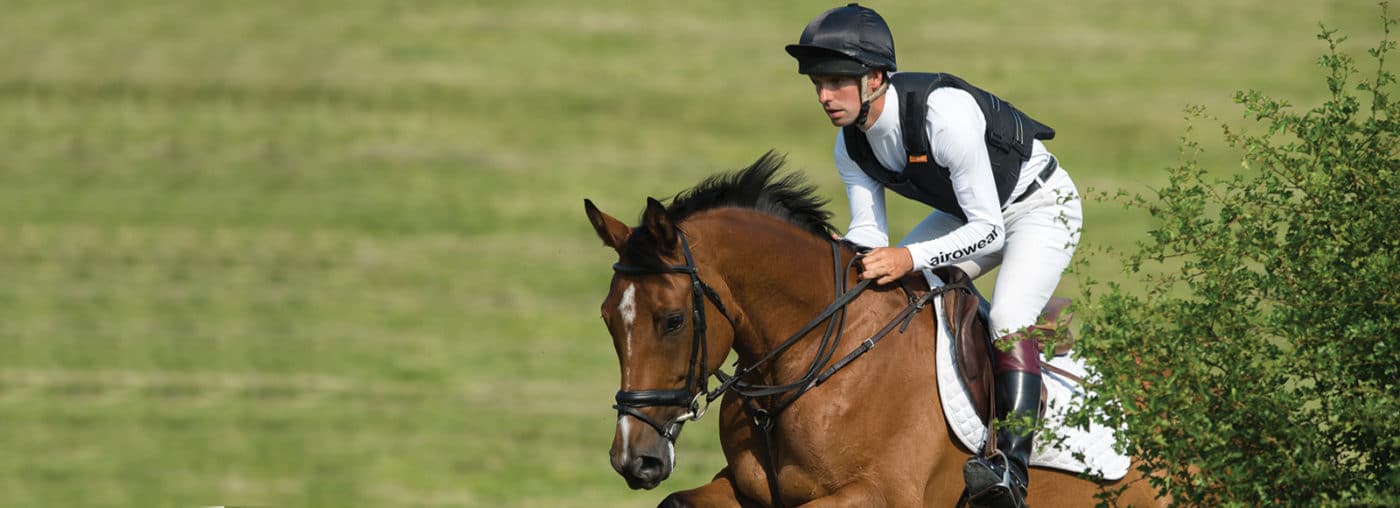
Made in Britain since 1911
To own a Charles Owen helmet is to own not only a part of equestrian history, but its future.
Four generations
World famous for raising the bar in safety, Charles Owen is a leading British manufacturer of riding helmets with a history dating back over 110 years.
When Charles Owen himself founded the company in 1911, his mission was to make products ‘for a safer world’.
The company has remained within the same family for four generations, today under the direction of founder Charles Owen’s great-grandson.
A brief history
It all began with a mechanic in East London. His name was Charles Owen.
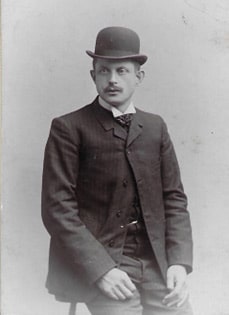
To escape acute poverty, Charles attended night classes to learn about hat making. In 1911, he made his first tropical pith helmet.
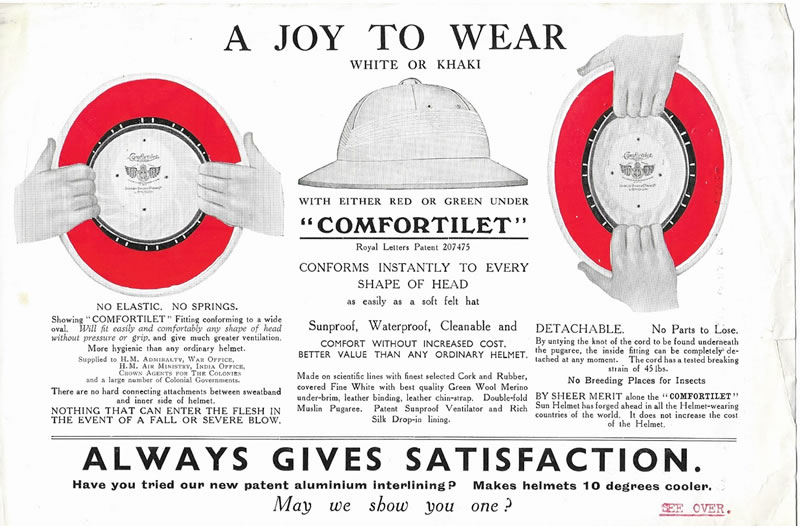
The early days revolved around manufacturing military helmets which were worn by the British Army throughout the First World War. Soon after, the company expanded into motorsport protective headwear.
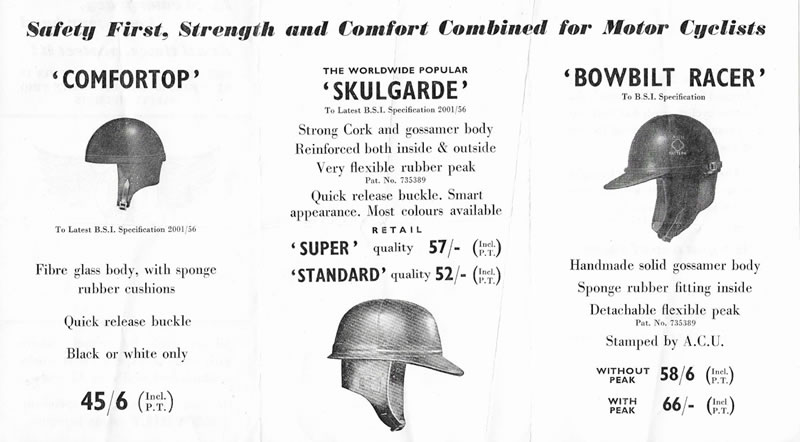
Charles Owen passed away in 1932, leaving his wife Francis and daughter Zena to run the family business and throughout the Second World War.
Zena married a Polishman called Walter Burek in 1946. Walter had escaped a prisoner of war camp and managed to get to the UK during the war. He spoke no English but quickly learnt.
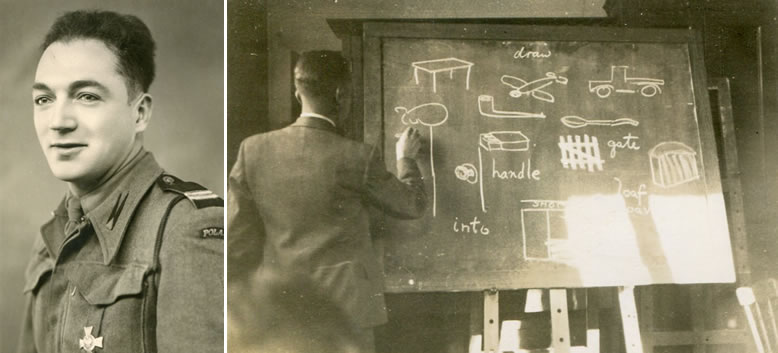
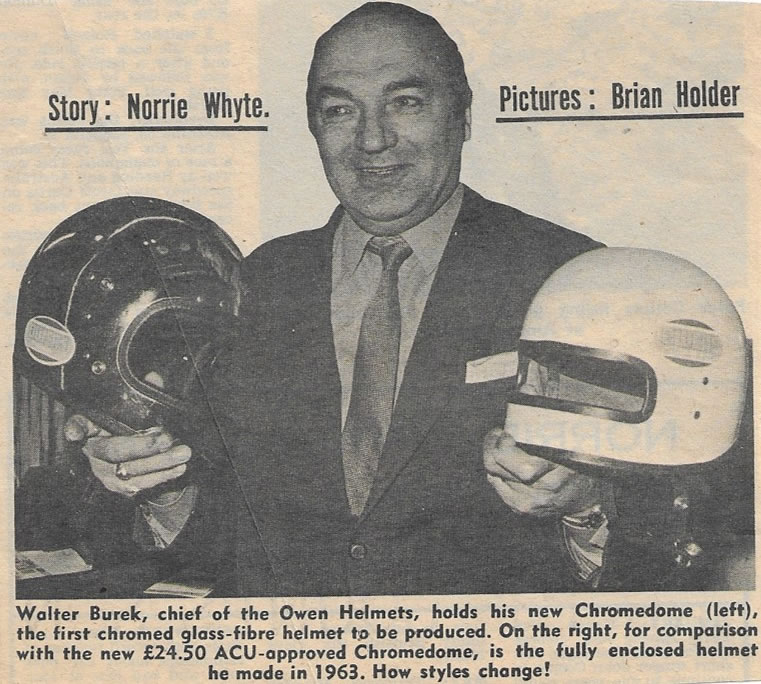
Following the war, Charles Owen grew quickly under Walter’s direction, making some of the world’s greatest motorcycle helmets.
Walter and Zena’s young children developed an interest in horse riding, and Walter spotted an opportunity to design a riding helmet with safety being the priority.
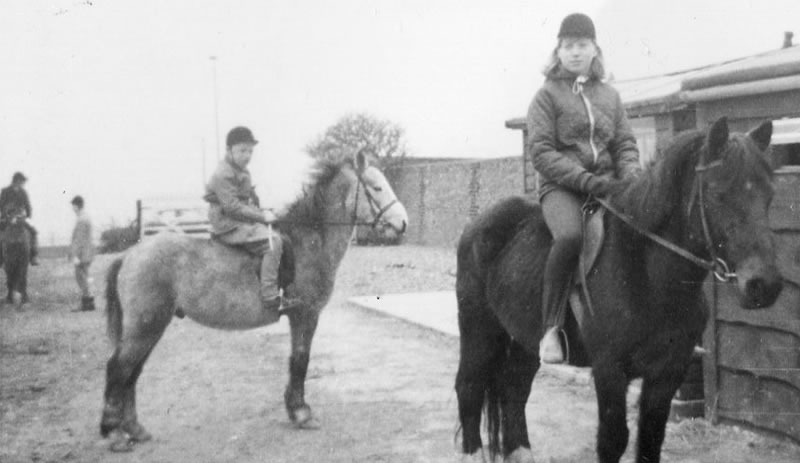
Riding helmets soon become the company’s flagship product and Charles Owen quickly established itself as the gold standard for safety.
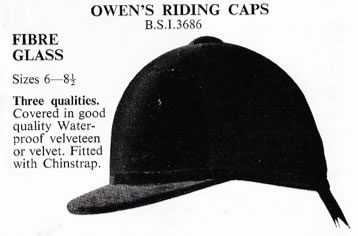
Walter’s son, Roy Burek, joined the family business in 1981. Roy was involved in creating the very first equestrian helmet safety standard, and in 1983 Charles Owen created the first dual-standard riding helmet.
That same year, Her Majesty Queen Elizabeth II awarded Charles Owen the Royal Warrant as protective headgear supplier to the Royal Mews at Buckingham Palace.
In 1987 the Charles Owen factory was relocated to Wrexham, North Wales.
From the first patent granted in 1924 to improve ventilation and fit through the Microfit system found in all Charles Owen helmets today, the company has always prioritised correct and comfortable fit.
Saving lives through ever-improved helmets was Roy’s driving force. A scientist at heart (he studied Chemistry at the University of Oxford), he was passionate about understanding head injuries and how to protect against them. This led to him later becoming an Honorary Professor of Cardiff University.
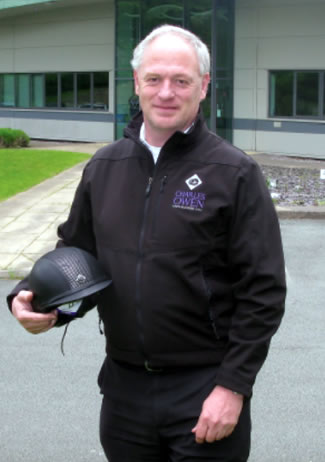
Roy passed away unexpectedly in 2019, and the family company passed along to the fourth generation, Owen Burek.
Owen continues the 110 year family tradition of innovating to create ever safer rider protection.
Charles Owen is deeply ingrained within the global equestrian industry as a trusted brand known for safety, quality, innovation and style.
Handmade in the UK
Each Charles Owen branded helmet is handmade by highly skilled technicians using the highest quality materials at our award winning, state-of-the-art factory in Great Britain.
Watch videoRoyal Works
Our award winning facility is situated in Wrexham, North Wales.
Inside the huge space, the workforce is organised into small teams that create the products from start to finish. Quality is paramount when it comes to safety.
Visit usProfessor Roy Burek
The company and its worldwide reputation for the safety and quality of its products is indebted to the late Professor Roy Burek, who passed away in 2019.
The grandson of Charles Owen, Roy was dynamic in leading industry research, studying traumatic brain injury and setting new standards for safety technology.
Charles Owen’s design engineers continue to innovate and develop new exciting products using his research and expert knowledge.
Watch video
Founded in 1985, Airowear is one of the world’s leading manufacturers of equestrian body protectors. Superior design and technology more effectively protects the vital organs and ribs in a fall.
Every Airowear body protector is certified for every safety standard, a notable first for the industry. Charles Owen acquired Airowear in 2012.